
Cabo de Gata-Níjar Natural Park is a UNESCO Biosphere Reserve and Special Conservation Zone. It harbours exceptional marine and terrestrial biodiversity that turns every kayak outing into a genuine natural safari. Here is what marine life, birds and geological features you can see from your kayak in Cabo de Gata Natural Park.
Marine life beneath the kayak
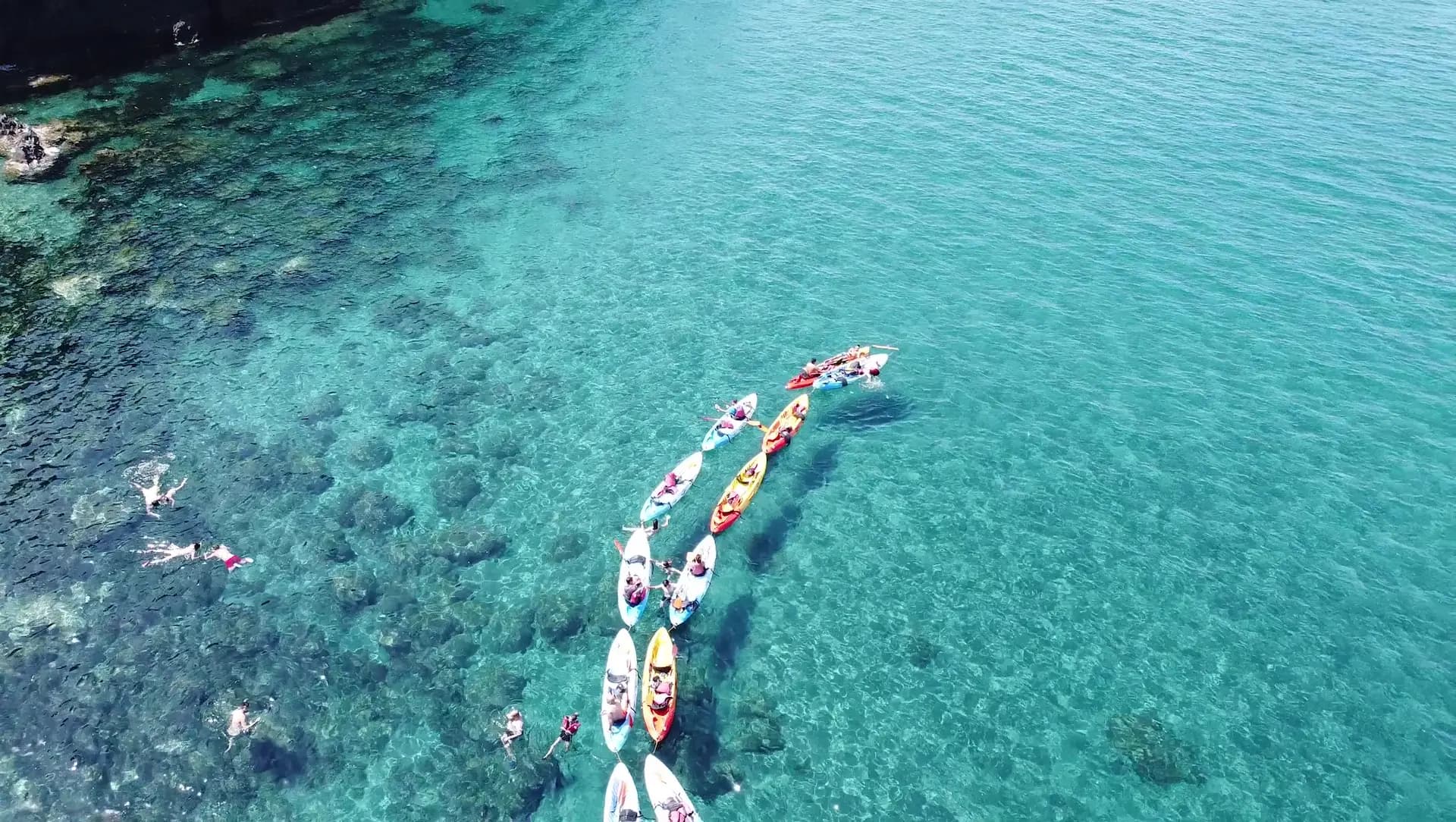
The first surprise for first-time visitors is the water clarity. With visibility of 15–25 metres on windless days, the seabed is practically visible from the surface. While paddling, you have a continuous front-row view of underwater life.
The common octopus: master of camouflage
The common octopus (Octopus vulgaris) is probably the animal that generates the most excitement among our clients. Masters of disguise, they can change colour and texture in milliseconds to blend with the rocky seabed. They are especially abundant in Cabo de Gata thanks to the reserve's protection. Expert guides know exactly where to find them, and spotting one is almost guaranteed on every outing.
The most colourful fish in the Mediterranean
- Parrotfish (Sparisoma cretense): with its extraordinary blue, green and pink colouring, it is the most striking fish in the Mediterranean. Cabo de Gata has an important population.
- Sea bream and salema: shoals moving in synchrony beneath the kayak, unafraid of humans in this protected zone.
- Rainbow wrasse (Coris julis): small and colourful, the male displaying a bright orange lateral stripe.
- Moray eel (Muraena helena): with luck, peering from a rock crevice. Unsettling-looking but completely harmless if left alone.

Fan mussels, starfish and benthic fauna
On shallow rocky areas, particularly during the snorkelling stop, you will commonly see red starfish (Echinaster sepositus), sea urchins, sea cucumbers, anemones and colourful sponges. Fan mussels (Pinna nobilis), endemic bivalves of the Mediterranean and critically endangered, have one of their best-preserved populations in Cabo de Gata — they can grow up to a metre long and are a genuine privilege to see.
Dolphins: the highlight of every outing
Sightings of bottlenose dolphins (Tursiops truncatus) at Arrecife de las Sirenas are among the most thrilling moments a kayak outing in Cabo de Gata Natural Park can offer. These cetaceans frequent the park's waters year-round, especially between May and October.
Dolphins are often curious about kayaks: they approach the vessel, swim alongside and sometimes leap directly in front of the bow. This completely natural interaction — with no stimulus from us — is simply magical. In over 60% of our outings to Arrecife de las Sirenas, some form of dolphin sighting occurs.
Birds you will see from the kayak
Cabo de Gata is one of the most important birdwatching locations in southern Europe. From a kayak at water level, you have privileged viewpoints that land-based observers never get.
The salt flats (Salinas de Cabo de Gata), just north of the lighthouse, host one of the largest flamingo colonies on the Iberian Peninsula — up to 2,000 birds between October and March. Great cormorants and shags are common on the rocky cliffs, often seen drying their wings spread wide in the sun. The Audouin's gull, a globally threatened Mediterranean species, has an important colony here — distinguishable by its red bill with a dark band.
Volcanic geology: a landscape unique in Mediterranean Spain
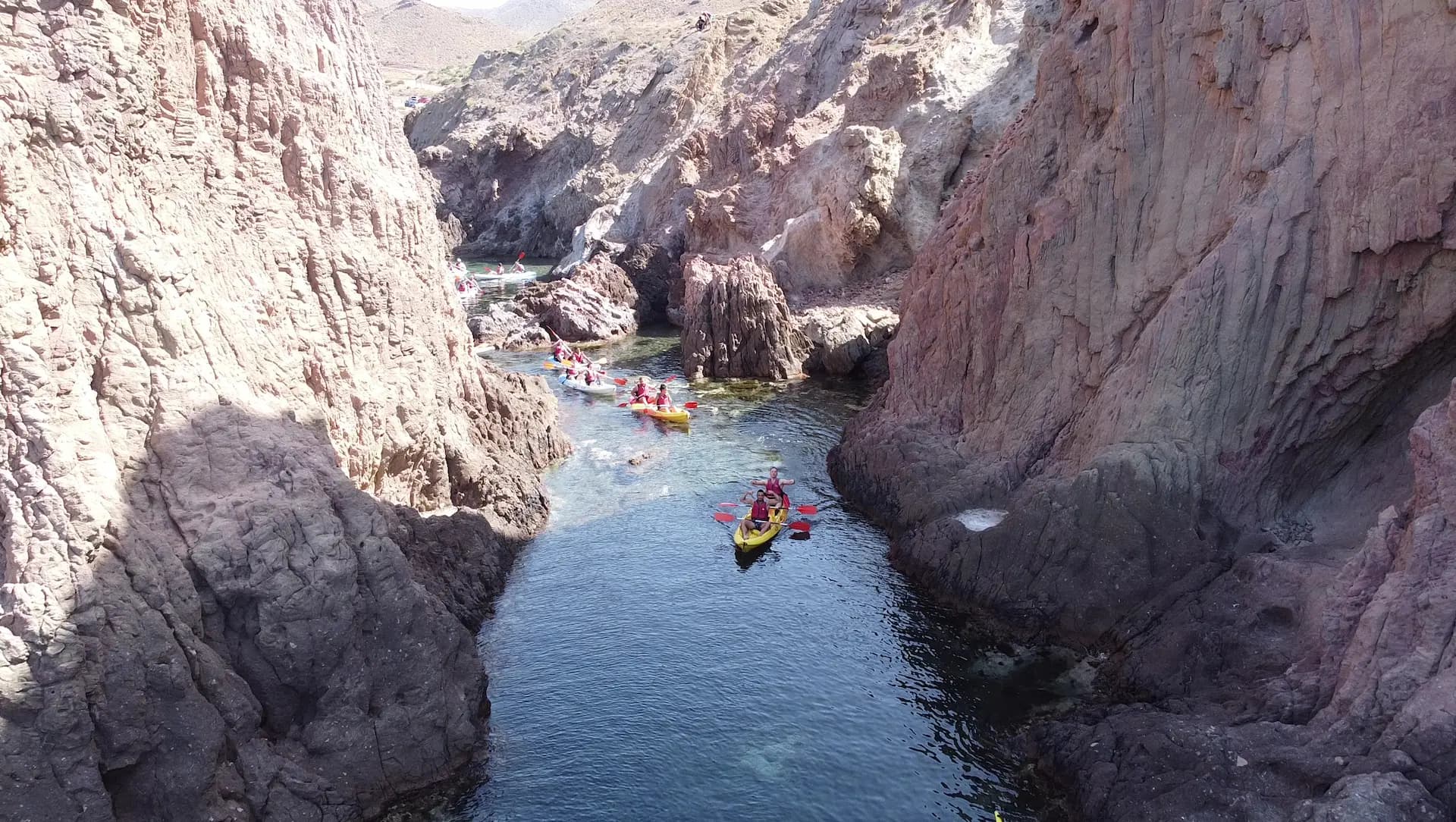
Cabo de Gata is part of the only active volcanic system in Mediterranean Spain, one of the most important on the entire Iberian Peninsula. The outcrops of lava, rhyolite and volcanic tuff create the characteristic black cliffs. From the kayak: columns of rock up to 40 metres high, sea caves carved by waves into solidified lava, natural arches and basalt formations. The Arrecife de las Sirenas — essentially solidified lava reaching into the sea — is a geological and biological laboratory unique in Europe.
Historical heritage visible from the water
- Faro de Cabo de Gata (1863): the oldest lighthouse on the Almería coast. Its silhouette over the volcanic cliffs is an iconic image of Andalucía.
- Torre de los Alumbres, Las Negras (16th century): a watchtower built to defend the coast against Barbary pirate raids from North Africa. Visible from the kayak as you leave Las Negras heading south.
- Castillo de San Felipe, Los Escullos (18th century): a coastal fort from the Age of Enlightenment. Impressive viewed from the sea.
Tags: